
Running a business in Hawke’s Bay means keeping your workplace safe, reliable and ready for customers, staff and day-to-day operations. Your electrical system plays a major role in that.
Lighting, power outlets, switchboards, machinery, heating, ventilation, refrigeration and other equipment all depend on a reliable electrical installation. When something fails, the problem can quickly become more than an inconvenience. It may interrupt operations, affect staff safety and create unexpected repair costs.
That is why regular commercial electrical maintenance is an important part of responsible business property management.
For businesses in Napier, Hastings and throughout Hawke’s Bay, planned electrical servicing can help identify developing problems before they turn into disruptive failures.
Why Commercial Electrical Maintenance Matters for Commercial Properties
Commercial electrical maintenance is often taken for granted because they are expected to work every day. However, components can deteriorate over time because of age, heavy use, heat, moisture, dust, vibration and changing electrical loads.
A regular maintenance programme allows potential problems to be identified before they become more serious.
For a commercial property, this can help with:
- Reducing unexpected electrical breakdowns
- Improving workplace safety
- Protecting electrical equipment
- Limiting business disruption
- Identifying ageing components
- Supporting appropriate compliance and record keeping
- Planning repairs before they become urgent
Preventative maintenance is particularly useful for businesses that rely heavily on electrical equipment or operate for long hours.
What Is Included in Commercial Electrical Maintenance?
Every business has different electrical requirements, so maintenance should be based on the individual property and how it is used.
A professional commercial electrician may assess areas such as switchboards, circuit protection, lighting, outlets, fixed wiring and electrical equipment.
Switchboard Inspection and Maintenance
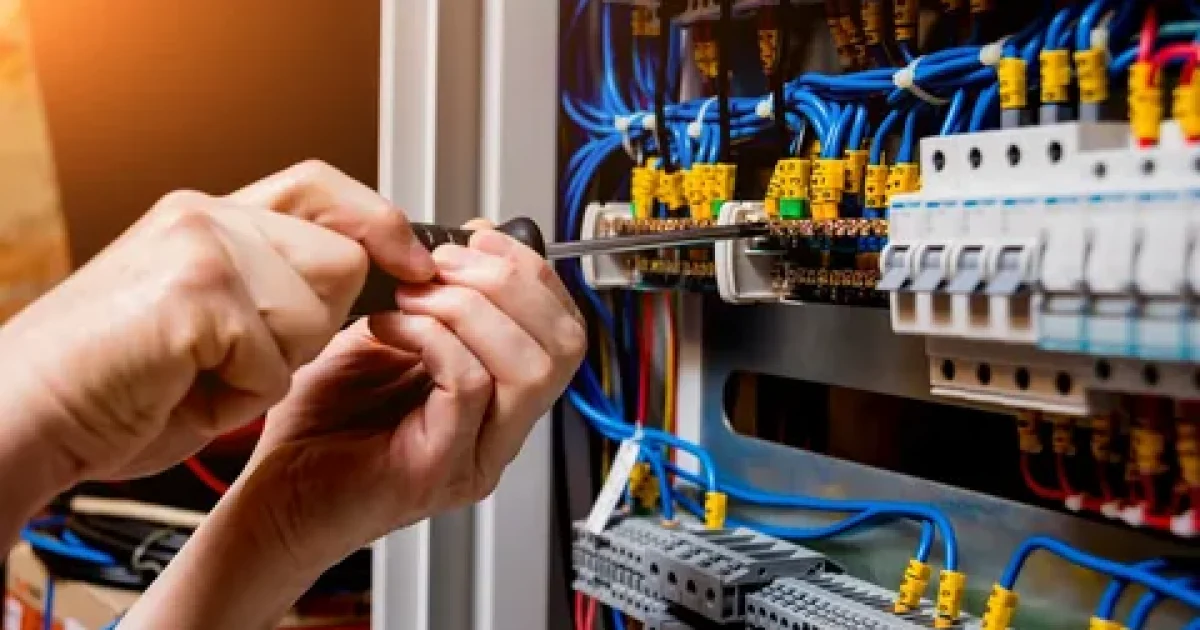
The switchboard is one of the most important parts of a commercial electrical installation. It distributes electricity throughout the premises and contains protective equipment designed to help manage electrical risks.
During maintenance, an electrician can assess the condition of relevant components and look for signs of deterioration, damage, overheating or other issues requiring attention.
If a switchboard is old or has experienced recurring problems, a professional assessment can help determine whether repair, replacement or further investigation is appropriate.
Lighting and Emergency Lighting
Reliable lighting is essential for offices, retail stores, warehouses, workshops, hospitality venues and industrial premises.
A maintenance visit can identify failed fittings, damaged components, unreliable controls and other lighting issues.
Emergency lighting also deserves particular attention because it forms part of the safety arrangements of many commercial buildings.
Power Points and Electrical Connections
Loose, damaged or deteriorated electrical connections can create safety concerns and contribute to equipment problems.
Businesses should not ignore signs such as damaged outlets, unusual heat, burning smells, buzzing or repeated electrical faults.
These issues should be assessed by a suitably qualified electrical professional.
Electrical Equipment and Machinery
Many Hawke’s Bay businesses depend on equipment that operates for long periods or under demanding conditions.
Manufacturing machinery, refrigeration systems, pumps, commercial kitchen equipment, HVAC systems and other electrically powered equipment can place significant demands on an installation.
Routine servicing and fault finding can help businesses identify electrical issues before they cause an unexpected interruption.
Preventative Commercial Electrical Maintenance Can Reduce Business Disruption
An electrical fault rarely happens at a convenient time.
For a retail business, a lighting or power problem can affect customers and staff. In a warehouse, an electrical failure may stop equipment from operating. In manufacturing, downtime can interrupt production and affect delivery schedules.
Preventative electrical maintenance provides an opportunity to deal with developing problems during planned service periods rather than waiting for an emergency.
This does not mean every electrical fault can be predicted. Instead, it gives businesses a more proactive way to manage their electrical infrastructure.
Electrical Safety for Businesses in New Zealand
Commercial property owners and businesses have important responsibilities when it comes to electrical safety.
New Zealand’s electrical safety framework includes requirements under the Electricity (Safety) Regulations 2010. WorkSafe explains that electrical installations must be maintained so they remain electrically safe.
Certain types of electrical work also have specific certification, inspection and testing requirements.
This is one reason businesses should use appropriately qualified electrical professionals for electrical work rather than attempting repairs themselves.
The exact requirements can vary depending on the installation, the type of electrical work and the environment in which the system operates.
What Businesses Should Know About Electrical Standards in 2026
Electrical requirements in New Zealand continue to develop, so businesses planning electrical upgrades or alterations should make sure they receive current professional advice.
The Electricity (Safety) Amendment Regulations 2025 introduced changes relating to electrical standards, including the cited version of AS/NZS 3000. WorkSafe has provided information about the transition arrangements and the requirements applying from November 2026.
Importantly, an existing installation does not automatically have to be upgraded simply because a newer standard becomes applicable. The condition and safety of the installation, along with the nature of any new work, need to be considered.
If your business is planning an electrical upgrade, renovation, new equipment installation or alteration, discuss the applicable requirements with your electrician before work begins.
How Often Should a Commercial Electrical Maintenance System Be Maintained?
There is no single maintenance schedule that is suitable for every business.
The right frequency can depend on:
- The age of the electrical installation
- The type of building
- Operating hours
- Electrical demand
- Environmental conditions
- Machinery and equipment
- Previous electrical faults
- Manufacturer recommendations
- Applicable inspection requirements
- The overall risk profile of the workplace
A small office may have very different maintenance needs from a manufacturing facility or industrial workshop.
A commercial electrician can assess the property and recommend a maintenance programme based on its actual electrical requirements.
Signs Your Business Needs an Electrical Inspection
Electrical problems do not always begin with a complete power failure.
Watch for warning signs such as:
Repeated Circuit Breaker Trips
If the same circuit keeps tripping, there may be an underlying problem that needs professional investigation.
Flickering Lights
Occasional lighting problems can have several causes. Persistent flickering should be checked rather than ignored.
Burning Smells or Unusual Heat
A burning smell, unusual heat around electrical equipment or discolouration can indicate a potentially serious electrical issue.
Buzzing or Crackling
Unusual sounds from outlets, switches, lighting or electrical equipment should be investigated by a qualified professional.
Damaged Cables or Outlets
Damaged electrical components can create unnecessary risks and should not be used until they have been properly assessed.
Frequent Equipment Failures
If machinery or electrical equipment repeatedly develops faults, the problem may not always be with the individual appliance. The electrical supply or installation may also need investigation.
Choosing a Commercial Electrical Maintenance in Hawke’s Bay
Choosing the right electrical contractor is about more than finding the cheapest quote.
Businesses should consider whether the contractor has experience with commercial properties and understands the requirements of the type of workplace being serviced.
Look for a professional who can provide:
- Commercial electrical servicing
- Fault finding and repairs
- Preventative maintenance
- Electrical testing where required
- Switchboard services
- Lighting maintenance
- Electrical installation work
- Clear communication and documentation
- Advice appropriate to the property’s requirements
Local knowledge can also be valuable. A contractor servicing businesses across Napier, Hastings and the wider Hawke’s Bay region can understand the practical needs of different commercial environments.
Why Planned Commercial Electrical Maintenance Is Better Than Waiting for a Breakdown
Waiting until something stops working can make electrical maintenance more expensive and disruptive.
A planned approach gives businesses greater visibility of the condition of their electrical systems. It can also make budgeting easier because non-urgent repairs can sometimes be identified and scheduled in advance.
Instead of dealing with:
Fault → Emergency call → Business disruption → Urgent repair
A planned approach aims for the following:
Inspection → Identify issue → Plan repair → Maintain reliable operation
Of course, urgent commercial electrical maintenance faults will still happen, but preventative servicing can reduce the number of avoidable surprises.
Commercial Electrical Services for Hawke’s Bay Businesses
Hawke’s Bay has a diverse business community, from offices and retail premises to warehouses, workshops, hospitality businesses, agricultural operations and industrial facilities.
Each environment has its own electrical demands.
A commercial electrical maintenance programme should therefore be tailored to the property rather than treated as a one-size-fits-all service.
Whether the goal is to address recurring faults, maintain existing equipment, review an ageing installation or plan future electrical work, a professional assessment provides a practical starting point.
Keep Your Business Electrical System in Good Condition
Reliable electricity is essential to modern business operations. From a small office in Napier to a busy industrial facility in Hastings, electrical problems can affect productivity, safety and operating costs.
Commercial electrical maintenance provides a proactive way to look after the electrical systems your business depends on.
Rather than waiting for a major fault, businesses can use planned inspections, servicing and repairs to identify potential issues and keep their electrical infrastructure operating as safely and reliably as possible.
Frequently Asked Questions
What does commercial electrical maintenance involve?
It can include inspections, testing, servicing, fault finding, repairs, and assessment of electrical equipment and installations. The scope depends on the type of business, building, and electrical system.
Is regular commercial electrical maintenance important for a business?
Yes. Regular servicing can help identify developing faults, support electrical safety, and reduce the risk of unexpected disruption.
How often should a business have its electrical system checked?
The appropriate frequency varies between properties. Factors such as the age of the installation, electrical load, operating environment and type of equipment should be considered.
Can an electrician maintain a commercial switchboard?
Yes. A suitably qualified electrician can inspect and maintain relevant switchboard components and advise whether repairs, replacement or further investigation may be required.
When should I call an electrician for a commercial electrical problem?
If you notice repeated tripping, burning smells, unusual heat, damaged electrical components, buzzing, flickering lights or recurring equipment faults, arrange professional assessment rather than attempting to repair the issue yourself.