
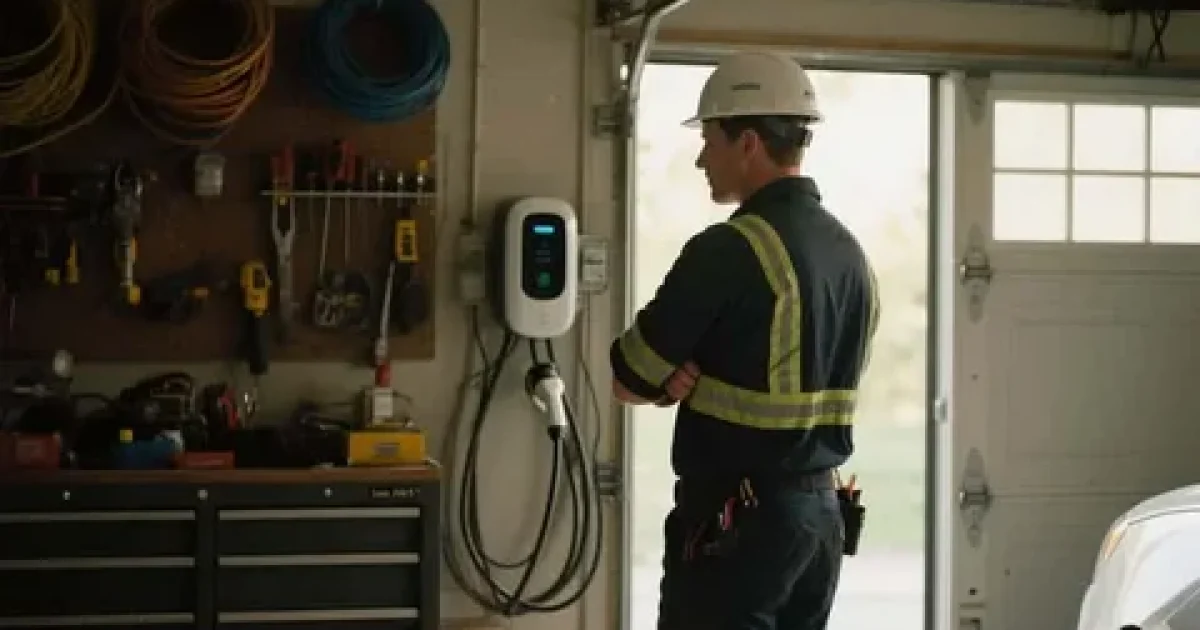
Electric vehicles are becoming a more common sight on New Zealand roads, and more homeowners in Hawke’s Bay are looking for convenient ways to charge their cars at home. For many EV owners, home charging is one of the biggest advantages of making the switch from petrol or diesel.
Instead of visiting a public charging station every time the battery needs topping up, you can simply plug your vehicle in when you get home. By the next morning, it may be ready for another day of driving.
However, EV charger installation Hawke’s Bay is not simply a matter of choosing a unit and attaching it to the wall. The right charging solution depends on your vehicle, property, electrical supply, parking arrangement and how much you normally drive.
If you are considering EV charger installation in Hawke’s Bay, understanding the options beforehand can help you make a more confident decision.
Why More Hawke’s Bay Homeowners Are Choosing Home EV Charging
Home charging offers something that public charging cannot always provide: convenience.
Once a suitable charger has been installed, charging can become part of your normal routine. You arrive home, connect the cable, and leave the vehicle to charge while you are inside.
Convenience for Everyday Driving
Most drivers do not need to completely recharge their EV every day. If your regular journeys use only part of the battery, overnight charging can be enough to replace the energy you used during the day.
This can be particularly useful for people who commute regularly or use their vehicle for shopping, school runs and other local trips.
Less Dependence on Public EV Charger Installation Stations
Public chargers remain important, particularly when travelling longer distances. However, having a charger at home means you do not have to rely on a public station for your everyday charging needs.
For many EV owners, public charging becomes something they use mainly for longer journeys rather than a regular part of their weekly routine.
What Is Involved in EV Charger Installation Hawke’s Bay?
A proper installation begins with assessing the property rather than choosing equipment first.
An installer needs to understand where the vehicle is parked, where the electrical supply is located, and whether the existing electrical system can support the additional load.
Property and Electrical Assessment
During an assessment, the installer may consider:
- The existing switchboard
- Available electrical capacity
- The proposed charger location
- Cable routing
- Distance between the charger and electrical supply
- Indoor or outdoor installation requirements
- The vehicle’s charging capability
This information helps determine what type of installation will work best.
Selecting the EV Charger Installation Equipment
Different EV chargers offer different charging speeds and features. Some are designed as straightforward home charging units, while others include smart features that allow homeowners to manage when and how their vehicle charges.
The best option is not necessarily the charger with the highest advertised power. It should be suitable for both the vehicle and the property’s electrical system.
Consider Your Vehicle’s EV Charger Installation Capability
Before purchasing a charger, check the maximum AC charging rate supported by your vehicle.
Installing equipment capable of delivering more power than the vehicle can accept may not provide any practical benefit.
Think About Where You Park
The location of your normal parking space is another important consideration.
A charger positioned close to the vehicle can make connecting and disconnecting easier and may also reduce the amount of cabling required.
If your vehicle is parked outside, the charger and installation should be appropriate for outdoor conditions.
How Fast Can a Home EV Charger Installation in Hawke’s Bay Charge Your Car?
Charging speed depends on several factors, so there is no single answer that applies to every EV Charger Installation Hawke’s Bay
The battery size, vehicle charging capability, and charger output all influence the time required.
Your Daily Driving Habits Matter
Consider how far you normally drive each day.
Someone who drives a relatively short distance may find that overnight charging easily meets their needs. A driver who covers much longer distances may prefer a higher-output charging solution.
This is why your daily routine should be considered when choosing a home EV charger.
Faster Charging Is Not Always Necessary
It can be tempting to assume that the fastest charger is automatically the best choice.
In reality, paying for additional charging capacity may not make sense if your vehicle cannot use it or if your normal driving pattern does not require it.
A properly assessed installation should focus on practical requirements rather than simply maximum charging speed.
How Much Does EV Charger Installation Hawke’s Bay Cost?
The cost of installing an EV charger can vary from one property to another.
There is no universal installation price because the amount of electrical work required depends on the individual site.
What Affects the Installation Price?
Several factors can influence the final cost, including:
- The charger model
- Cable length
- Installation location
- Switchboard configuration
- Electrical upgrades
- Access to the installation area
- Additional protection or equipment
- Complexity of the cable route
A charger installed close to a suitable electrical supply may require less work than one located a considerable distance away.
Ask for a Clear Installation Quote
Before agreeing to the work, ask the installer what is included in the quotation.
The quote should make it clear whether equipment, labour, cabling and any required electrical work are included.
This makes it easier to compare different options and reduces the possibility of unexpected costs.
Will Your Home Need an Electrical Upgrade?
Not every property needs an electrical upgrade before installing an EV charger.
However, an EV charger adds another electrical load to the property, so the existing system needs to be assessed.
Why Electrical Capacity Matters
Your home is already using electricity for appliances, heating, lighting and other equipment. The installer needs to consider the overall demand when determining whether the proposed charger can be installed safely and appropriately.
If there is not enough available capacity, the installer may recommend an alternative solution or an electrical upgrade.
Smart Charging and Load Management
Some modern charging systems offer features that can help manage electricity demand.
Depending on the system and property, smart charging can allow charging to be scheduled or managed around other household electricity use.
This can be useful for homeowners who want greater control over their EV charging.
Why Professional EV Charger Installation Is Important
An EV charger is part of your home’s electrical system, so installation should be treated as professional electrical work.
Choosing an appropriately qualified installer helps ensure that the charging equipment is installed correctly and tested properly.
Safety Should Come First
A professional installer can identify potential electrical issues before installation and make sure the charging equipment is suitable for the property.
They can also consider cable protection, equipment positioning and other factors that may not be obvious to a homeowner.
Better Long-Term Reliability
A correctly installed charger is more likely to provide consistent performance over time.
Professional installation can also give homeowners greater confidence that the system has been selected and installed with their specific property in mind.
Choosing an EV Charger Installer in Hawke’s Bay
If you are comparing local installers, do not base your decision on price alone.
The quality of the assessment and installation is just as important as the cost of the equipment.
What Should You Look For?
Consider whether the installer:
- Has experience with EV charging systems
- Understands residential electrical installations
- Can assess your property’s electrical capacity
- Provides a clear quotation
- Can explain the charger options available
- Offers appropriate after-installation support
- Uses equipment suitable for your vehicle and property
A good installer should be willing to explain the proposed solution rather than simply recommending a particular charger.
EV Charging for Different Types of Properties
Homeowners are not the only people who can benefit from EV charging.
Electric vehicle charging can also be considered for rental properties, workplaces and commercial buildings.
EV Chargers for Rental Properties
Landlords may choose to install charging facilities for tenants who own electric vehicles.
The installation needs to take the property’s electrical system and parking arrangements into account, particularly where several tenants may eventually need access to charging.
Workplace EV Charging
Businesses may also install charging points for employees, visitors or company vehicles.
Workplace charging can be useful for employees who leave their cars parked for several hours during the day.
The right setup will depend on how many vehicles need to charge and how frequently the chargers will be used.
Questions to Ask Before Installing an EV Charger
Before choosing a home charging system, it is worth asking a few straightforward questions.
Questions About the Charger
Ask:
- Is the charger compatible with my EV?
- What charging speed does my vehicle support?
- Does the charger offer smart charging?
- Is it suitable for indoor or outdoor installation?
- What warranty is provided?
Questions About the Installation
You should also ask:
- Does my home have sufficient electrical capacity?
- Where is the best location for the charger?
- How will the cable be routed?
- Will my switchboard require any changes?
- What is included in the installation price?
- Has the completed installation been tested and commissioned?
Getting clear answers before work begins can prevent confusion later.
How to Make Your EV Charging Setup Future-Ready
Your current EV may not be the only electric vehicle you own.
Your charging requirements could change if you purchase a different vehicle, upgrade to a larger battery model or eventually have more than one EV in the household.
Plan Around Your Future Needs
Future-proofing does not mean buying the most expensive charger available.
Instead, discuss your likely future requirements with the installer. They can consider the property’s electrical capacity, charger location and possible future changes when planning the installation.
This approach can help avoid unnecessary changes later.
Is Home EV Charging Worth It?
For many EV owners, home charging can make electric vehicle ownership considerably easier.
The biggest benefit is convenience. You do not have to make a separate trip to charge your car when a suitable charging point is available at home.
The right setup can also make your daily routine simpler because charging can happen while the vehicle is parked overnight or during other periods when it is not being used.
The Right Solution Depends on Your Home
There is no one-size-fits-all answer for EV Charger Installation Hawke’s Bay.
The ideal charger depends on your vehicle, driving habits, electrical system and parking arrangements.
That is why getting the property assessed before installation is usually a sensible first step.
Getting Started With EV Charger Installation in Hawke’s Bay
If you are ready to install an EV charger in Hawke’s Bay, begin by arranging an assessment of your property.
A professional installer can look at your electrical supply, parking location and charging requirements before recommending a suitable solution EV Charger Installation Hawke’s Bay.
You can then compare the available charger options and understand the installation work involved.
For homeowners across Hawke’s Bay, a properly planned charging system can turn EV charging into a simple part of everyday life. Instead of thinking about where to find your next public charger, you can return home, plug in and let your vehicle charge while you get on with your evening.
Final Thoughts
EV Charger Installation Hawke’s Bay is an important step for anyone who wants the convenience of charging an electric vehicle at home.
The best installation is not necessarily the most expensive one or the charger with the highest charging capacity. What matters is choosing equipment that matches your vehicle and having it installed correctly for your property.
If you are considering EV charger installation in Hawke’s Bay, take the time to assess your electrical system, understand your charging requirements and speak with a qualified professional before making a decision.
With the right equipment and installation, home EV charging can be straightforward, convenient and well suited to your everyday driving needs.